Support an Author – Interview with MA Destiny

Hello! Today with us we have Ashley Coonfield (reader) and MA Destiny (author)! *Applause*

Ashley Coonfield: Can you tell us about yourself and what inspired you to become an author?

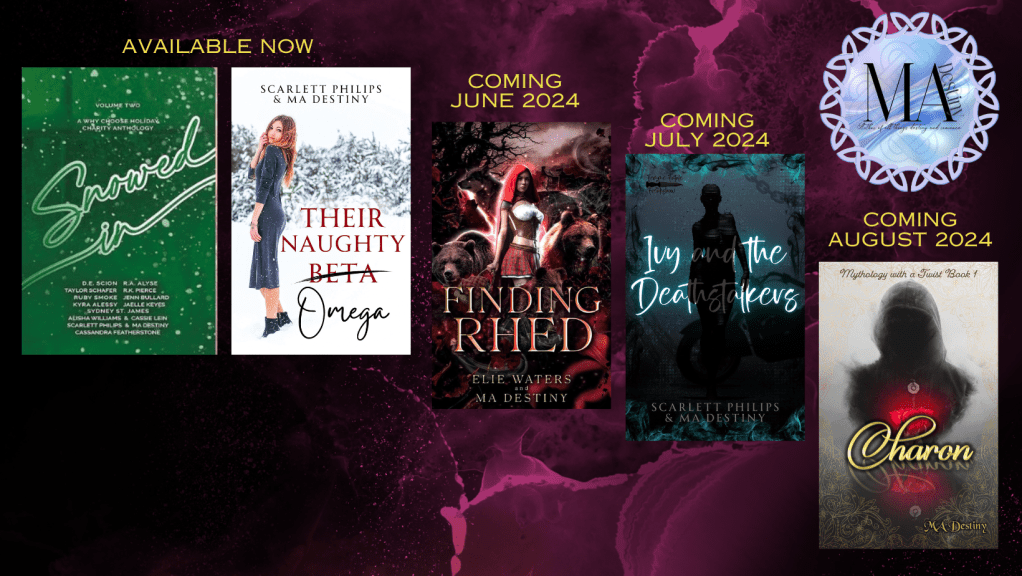
MA Destiny: Live in a Homestead with my husband I can always find stuff to do but on days like today when the weather is bad, I get stuck in the trailer. I have had multiple felt back surgeries, leaving me limited on things I can do at times. I became an author by chance really. I had tried writing several other books before and a good friend of mine asked me to do a cowrite with her and I jumped on it and now I am working on a solo plus some other cowrites.


Ashley Coonfield: What genres are you favorite to write and why are draw to these genres?

MA Destiny: PNR. I prefer the fantasy side of romance. I I think everybody should be able to escape reality for a little while.


Ashley Coonfield: Do you have any rituals you follow while you are writing?

MA Destiny: No, I don’t.


Ashley Coonfield: Do you have any special snacks or drinks that fuel you as you are writing?

MA Destiny: I love green tea, cold with sweetener and coffee creamer. I don’t care for the bitter taste of tea and coffee so I learn to drink it that way when I lived in California.


Ashley Coonfield: How do you balance writing with your life (ie job, family etc)

MA Destiny: Unfortunately, living on a Homestead that comes first. I do not want to push my writing, so I only write when the spirit moves me. I think I come up with a better story when I do.


Ashley Coonfield: Do you online your stories before writing or do you let the story unfold as you are writing?

MA Destiny: I have a basic idea, but sometimes it veers off to the right lol if I like revers fine if not, I will delete and start over from where it veered off


Ashley Coonfield: What role does research play in your writing process, particularly for book set in specific time periods or locations. What role does research play in your writing process when you are world building?

MA Destiny: Oh, I always do research if I am going on subjects that I don’t know. Like what the Romani call an enforcer. My mythology ones I know mythology very well, but if I have any questions, I may look things up. And then I twist them all to hell lol.


Ashley Coonfield: How do you approach world building in your writing for fantasy?

MA Destiny: I try to make it believable to a point that it’s not as far-fetched from our world so that it’s easier for the readers to immerse themselves in.


Ashley Coonfield: Do you prefer traditional publishing or self publishing? Why?

MA Destiny: Someday I hope to be published by a publisher. But for now I’m fine self publishing. Less time constraints, and less pressure.


Ashley Coonfield: Who your favorite character how written to date and why?

MA Destiny: Charon is my absolute favorite right now. I like the hidden twist in her from mythology, and who she really is. It has been fun writing her.


Ashley Coonfield: How do you unwind and recharge when your are not writing?

MA Destiny: Puzzles I found an app that I can do on my phone so I don’t have to worry about losing the pieces lol.


Ashley Coonfield: What types of books to you like to read? Your favorite author and current read?

MA Destiny: I prefer PNR whether it’s MF or RH I don’t care. Unfortunately, my favorite author is just a fantasy author named RA Salvatore, and I’m reading a historical romance for a fellow author that needed some help fixing some issues.


Ashley Coonfield: How do you handle writer burnout or writer’s block? 

MA Destiny: Time take some time let it come back to me I try not to force it.


Ashley Coonfield: What is your favorite thing about being an author and your least favorite thing?

MA Destiny: I love getting the story down on paper and creating some thing that makes people smile. I hate the BS to get it actually out there. Going through Amazon and other services suck.


Thank you for both for participating in Support An Author event!!!

Support an Author – Interview with Alex Raine

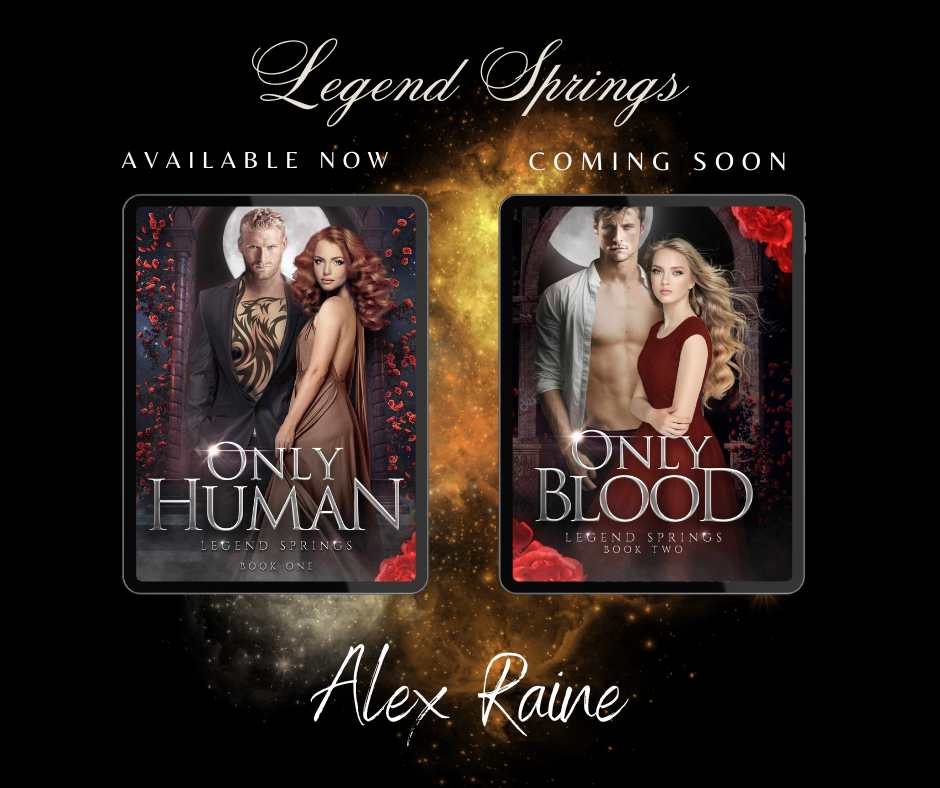
Hello! Today with us we have Sara Cayson (reader) and Alex Raine (author)! *Applause*

Sara Cayson: Favorite book genre?

Alex Raine: I used to say PNR, but lately I’ve been reading a LOT of Meghan Quinn, so whatever genre she writes. ^_^


Sara Cayson: Subjects that you like in books?

Alex Raine: You mean like tropes? If so, I like friends-lovers, close proximity, fake relationships, fated mates, and enemies-lovers.


Sara Cayson: Do you prefer more smut or plot?

Alex Raine: Oh plot plot plot. If a book has no sex even, I’m okay with that. I think people rely too much on the smut these days, imo. Is it good sometimes? Yes. Does it get old? Also yes.


Sara Cayson: Do you enjoy world building in your stories?

Alex Raine: I do, to an extent. I never know when to cut off. Like, when is enough for the readers?


Sara Cayson: I don’t know if this counts but. Favorite color?

Alex Raine: I don’t mind it. It’s a  tealish color like this –>🩵


Sara Cayson: Do you have an area where you write your books?

Alex Raine: My dining room table, in a big comfy office chair because I’m short and the table is the perfect height.


Sara Cayson: How do you come up with your characters?

Alex Raine: All of my characters are parts of mine and my spouses personalities. And Kiki, that’s my cousin all the way. Where I’m more Willow/Cosa/Kimble/Lucien, Ryder is Riftyn/Piper/Mila/Zane. I also have some author friends in there too.


Sara Cayson: After this book series is done do you plan on writing more?

Alex Raine: Oof, that’s a hard one. I wasn’t even planning on this one lol. But… Never say never.


Sara Cayson: Do you have a favorite author?

Alex Raine: I have a few, but I aspire to be like Meghan Quinn or Penelope Bloom one day.


Sara Cayson: What inspired you to become an author?

Alex Raine: I wouldn’t say inspired. I was DARED! Can you believe that? My author friend E.A. said, “You should do this, write a book. I double dog dare you!” I don’t back down from a challenge, so here we are.


Sara Cayson: How do you get out of a writer’s block?

Alex Raine: Haha. Tears. Whining. Throwing things. My friend, Bonnie, sometimes threatens me.


Sara Cayson: Do you have any advice for new authors?

Alex Raine: Don’t give up, stay humble, and have fun with it. Forget marketing while you write, forget all that. Just write what makes YOU happy.


Sara Cayson: When you came up with the MMC did you have an idea of what his personality would be?

Alex Raine: Absolutely! I knew he would be just like Ryder. I even asked her all the time, if I said or did this what would you say or do? So, a lot of what he says and does is all her.


Sara Cayson: What is one thing you want readers to know about you?

Alex Raine: That I appreciate them more than they’ll ever know. If just one person messages me and says, “Your book made me laugh.” Then I’ve done everything I set out to do.


Sara Cayson: Would you ever like your book to become a movie?

Alex Raine: Now THAT’S a question! It would be cool, yeah. But I know it’s not good enough for that. But ahhh to dream, right?!


Sara Cayson: When you came up with your FMCs did you get ideas from other characters or from other people like friends or family?

Alex Raine: Definitely from real people. As I said above, they’re all loosely based on myself and Ryder with a few others sprinkled throughout. But the easiest way I formed them was to think about convos or things that I would enjoy, or that I would find hilarious. I’m kind of a big dork that way.

Thank you, Sara, for these wonderful questions.

XoXo Alex


Thank you for both for participating in Support An Author event!!!

Support an Author – Interview with Fallon Raynes

Hello! Today with us we have Rachal Davis (reader) and Fallon Raynes (author)! *Applause*

Rachal Davis: Can you tell us about yourself and what inspired you to become a writer?

Fallon Raynes: The stories and characters are always in my head. They show me scenes and I write them down. I don’t think it was until I saw Author Marie Force and read that she had self-published after being rejected by traditional publishers that I ever thought I would publish a story. After I read that The Applicant came to mind. I started working on that story about 19 years ago (maybe 20). It’s taken me a long time to flesh that story out. I would work on it and then life would happen, then I would work on it some more. After talking to my editor after she read through it (about a year or so ago) and hearing her input I realized what I had been missing. I have edits ready to go on that I just need to weave them in. 😊


Rachal Davis: What genre(s) do you typically write in, and what draws you to those genres?

Fallon Raynes: Thriller, mystery, and horror. I think I’m drawn to them because that’s how the stories are presented to me in my head. I go where the story takes me. I will not rule out writing other genres. 😊


Rachal Davis: Do you have any rituals or routines that you follow when writing?

Fallon Raynes: No. I write when the characters are willing to talk to me. When I need to get a story written and done for a submission, I will work on it when I take breaks from the day job or at night. If I force a story the words won’t come to me.


Rachal Davis: Are any of your characters based on real people or inspired by events in your own life?

Fallon Raynes: Sort of. There are things I take from my life or have seen and my brain will take me on a journey with those events to outlandish places. 😊 The characters have a life of their own. Something might grab my attention but I always think “What if _____” and insert anything for what might happen.


Rachal Davis: What inspired the plot of your latest book?

Fallon Raynes: A random thought. Most of my stories happen to me while doing anything; watching tv, listening to a song, working, talking to someone. I will take those and make notes, or record a paragraph on my voice app on my phone. Or if I’m at work, I’ll start an email to myself and let the movie take shape in my mind. I see things in pictures/movies, and I have to stop to record it. I wish I could plug directly into my brain and download the scene in my head because I cannot type or write fast enough. 😊 


Rachal Davis: Do you outline your stories before writing, or do you prefer to let the story unfold as you write?

Fallon Raynes: Outlining is the HARDEST thing in the world for me to do. I dreaded every single time my English teacher or professor asked me to outline as part of the homework; especially before we could move on to writing. “I don’t know where the story is going how can I outline it?” That was what I always asked them. It was frustrating. My stories come to me in pieces. Sometimes I have a beginning or an end, sometimes the middle, sometimes the beginning and the end and no middle. It all seems to come together once I start working on it. 😊


Rachal Davis: What do you hope readers will take away from your work?

Fallon Raynes: I hope a sense of feeling. I realize not every story I write will touch the reader because they may not be at that place in their life, or have never gone through what my characters are experiencing and that’s okay. I know I don’t like every story that and author I love writes. It’s just the nature of the world. It’s okay. If we were all the same, we’d be robots! 😊


Rachal Davis: What role does research play in your writing process, particularly for books set in specific time periods or locations?

Fallon Raynes: Research is a humungous Rabbit Hole!! Ha-ha! I know all of us authors face this. We can research the heck out of things but that usually ends up with us getting no words on the page and more stories to write! I will say this. I have spent over an hour researching something just to put ONE sentence on the page! One! LOL It’s crazy! But, if you don’t get it right readers notice. And, I don’t know about you, but when I watch a romance movie and I see a mechanic pouring water on his head to cool off I want to SCREAM! I’m married to a retired mechanic. They are already dripping wet with sweat after standing over a hot motor in a hot shop. They do NOT add to it by pouring water on their head. Research is KEY! 😊


Rachal Davis: What advice would you give to authors who are considering self-publishing?

Fallon Raynes: Write the story!! Don’t worry about how it looks (grammar, storyline, etc) just put it on the page. Then, read it. Make notes as you read so you can fix things, and maybe if a character isn’t fully functional you can fix them. But write the story. Many authors have told me you cannot edit a blank page. And, get an editor. One who is not a proofreader but edits all things. They are worth their weight! 😊


Rachal Davis: How do you market and promote your books?

Fallon Raynes: Poorly. 🤣 I am not very good at it, but I sign up for social media book events/release parties/takeovers any chance I get. I have used ads when I run sales, and I’m lucky when others share their reviews after they’ve read them. I have tried a few things but ultimately it’s the reader that loved my story(ies) that makes someone else want to read it. Many people buy a book when it’s on sale and then it sits in the TBR forever. I’m also guilty of that, but, I know I supported that author and bought their book. I hope someday to get better at marketing. It’s on my list of things to do. 😊


Rachal Davis: Do you have a favorite character or book that you’ve written? If so, why?

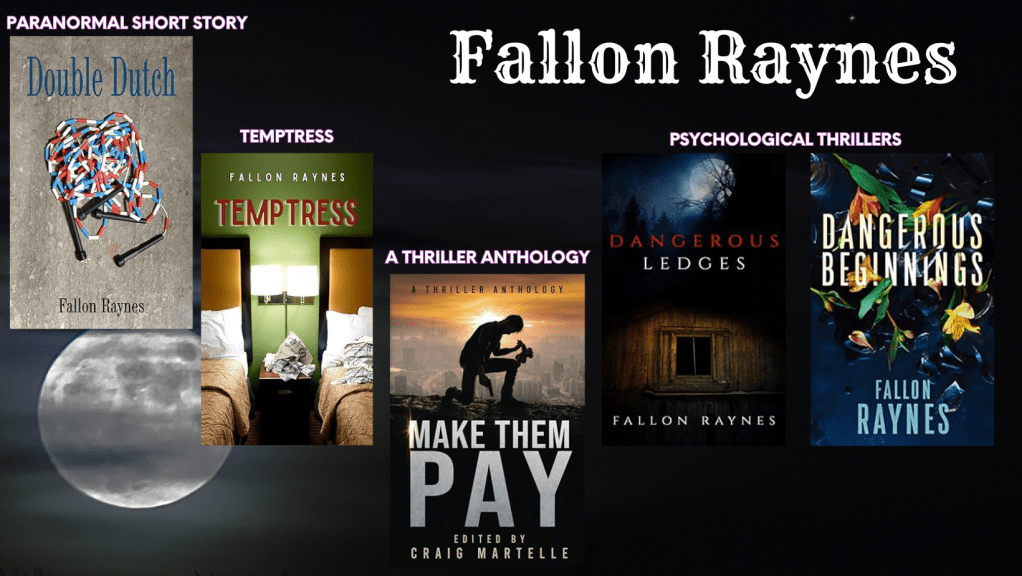
Fallon Raynes: Someone asked me that recently. It’s like asking me to choose a favorite child. 😊 I do not have a favorite story or character. I’m not sure if I will, but Dangerous Ledges will always hold a special place in my heart because it was my first published book. 😊 Characters will fluctuate for me because they are fun to write, but no favorites yet.


Rachal Davis: How do you stay motivated and overcome challenges while writing?

Fallon Raynes: I try to exercise when I get in a funk. It’s hard to write when I’m overwhelmed, which is why I’m at a standstill right now. Sometimes a writing challenge helps get the brain juices flowing, or an anthology to submit to. Writing a short story for that can pick me back up. 😊


Rachal Davis: What do you enjoy most about being a writer?

Fallon Raynes: The ability to see the story play out in my mind like a movie. A close second is connecting with readers during takeovers which I enjoy doing! 😊


Rachal Davis: How do you decide on the titles for your books?

Fallon Raynes: I have book titles pop in my head often. I write them down. They may come with a story too and I’ll jot that down with the title. In the case of Dangerous Ledges I had a title for it, then it changed but then it didn’t fit. The one-day SMACK! Dangerous Ledges title slapped me upside the head. I loved the play on Ledge’s name and, well, you read the story. 😉


Rachal Davis: How do you unwind and recharge when you’re not writing?

Fallon Raynes: Lately, my brain is too full of all things, so I play a game on my phone while we watch TV at night. I also love to be outside when the weather is nice. Especially on a sunny day, which in Michigan seems to very few days a week the past few years. I love to read, but again, like writing, I cannot do it when I’m overwhelmed. I haven’t read much lately. Putting jigsaw puzzles together is relaxing for me too. 😊


Rachal Davis: How do you handle writer burnout or creative blocks?

Fallon Raynes: Probably not very well. I know things will come to me when it’s time. I usually have a bunch of story ideas that pop into my head and I make notes on all of those. But, when I finish a story and it’s ready to publish it’s like sending your kid off to college. You miss the characters and playing in their world. For me I need time in between to refocus. Working a full time job is also time filling so I take longer than some authors do to write. There is a 1 million words in a year challenge that authors do, and that’s on my list to try when I get closer to retirement. Which also makes me mention here for any reader reading this, Beware the authors that release a LOT of novels in one year on a constant basis. They’re probably pirating others’ stories; changing the title/character names/locations but the story and words are the same. That happens frequently so never feel you can’t reach out to an author if you ever feel you stumbled onto a stolen book.


Rachal Davis: How do you approach the pacing of your stories, and what techniques do you use to keep readers engaged?

Fallon Raynes: I have no clue. 🤣 The story unfolds in my mind and I write it down on the page. There’s a meme out there on social media that is something close to this “The characters do stupid things and I write up the incident report.” The pace is all on them. I have nothing to do with it. But, I will take credit for keeping as much “fluff” as I can out of the story. I think that helps readers feel compelled to keep reading. I will skim a book if an author gets too wordy in sections of the book just to reach a certain word count. “Fluff.” My books are not fluffy. 😁

Thank you so much! That was fun. 💕


Thank you for both for participating in Support An Author event!!!

Support an Author – Interview with Riverr Ravenzwood

Hello! Today with us we have Amber Kestner (reader) and Riverr Ravenzwood (author)! *Applause*

Amber Kestner: What is your name and genre you write?

Riverr Ravenzwood: Riverr Ravenzwood and I write fantasy. 


Amber Kestner: What is the first book you published?

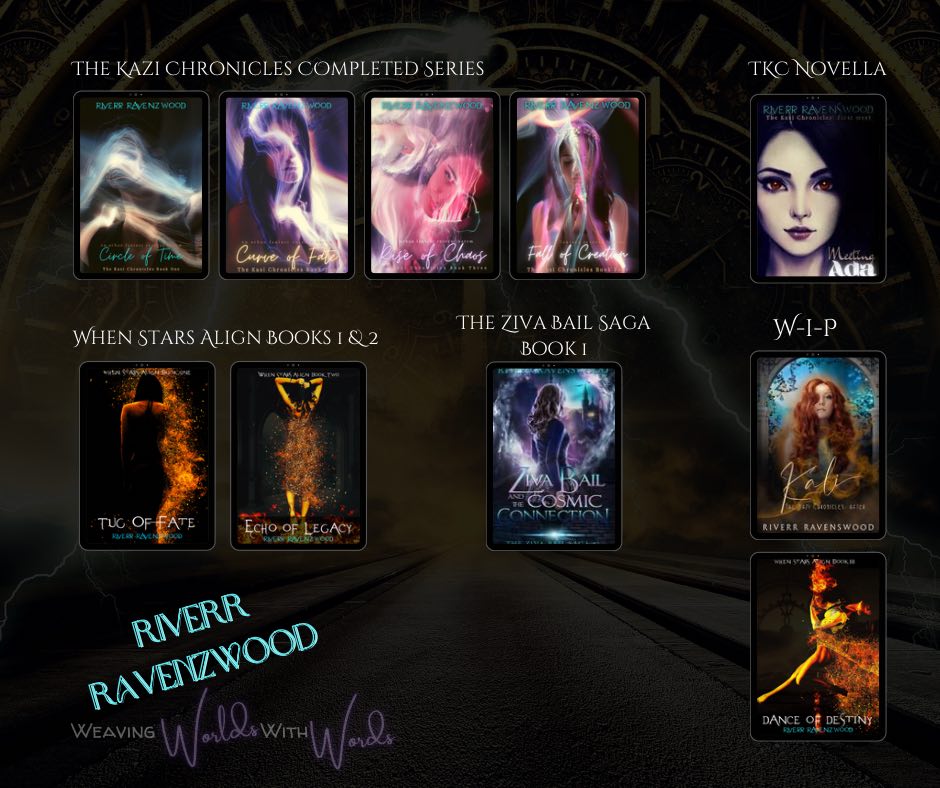
Riverr Ravenzwood: Tug of Fate, book one of the When Stars Align Series. 


Amber Kestner: Where did the inspiration for Ziva Bail and the Cosmic Connection come from?

Riverr Ravenzwood: I guess from the deep recesses of my mind? Haha. I mean, it’s almost every author’s dream, isnt it?


Amber Kestner: What is the biggest book you have written?

Riverr Ravenzwood: The Kazi Chronicles Finale, Fall of Creation. It’s a whopping 180k words long. 


Amber Kestner: Do you have a favorite character that you have written? If so why?

Riverr Ravenzwood: It’s really hard to say. But if I really have to pick, then I think Kali (The Kazi Chronicles) comes close to that. All of my characters are my favorite. But Kali has surprised me. When I started her journey, I had no idea it would turn out to be this way. And I can’t say more without giving away spoilers. But, yeah. 


Amber Kestner: Girl power exist in Ziva Bail and the Cosmic Connection, would that be able to exist if it were in the opposite gender? If so why or why not?

Riverr Ravenzwood: Well, boy power does exist in my books. Friendships and family play a critical role in my stories, as you’d have seen. I think the power that Ziva and April share shines primarily because we are aware of their history (a bit) and we are privy to how much they’ve overcome. So we can, in our minds, see their trajectory and rejoice silently with them. You know what I mean? But yes, boy power does exist. I call it “tribe power”. You find your tribe and give with it. It’s ride or die. It’s a theme in all of my books. 


Amber Kestner: Ada is a badass character in Circle Of Time Kazi Chronicles: Book , what is the difference between Ada and Ziva?

Riverr Ravenzwood: Well, to start with, both are badass females and both are strong characters. Both have their own transformation trajectories but the main difference is in where the power in them comes from. Ada’s comes from her family. Her desire to do whatever it takes to protect her family is the fuel. The close knit bond she shares with her father and ‘grandpa’, and with her animals, is like a warm hug wrapped in a blanket. Ziva’s power comes from her desire to never be weak again. Her desire to protect her best friend, April, and herself, is what makes her stronger every time she’s thrown in a loop. Both Ada and Ziva, however, will cross pits of fire for their loved ones, quite literally. 


Amber Kestner: Do you have any rituals or routines that you follow when writing?

Riverr Ravenzwood: Not really. But a good fragrance in my home, and music, is something I find enjoyable every time I write. 


Amber Kestner: What do you hope readers will take away from your books?

Riverr Ravenzwood: I hope they are filled with wonder. I hope they enjoy the worlds I create and are transported to it, even momentarily. I hope to infuse everyone’s life with joy and magic and if my books can help them see the magic in their own lives, and relationships, then I’ll be more than grateful to the Universe for giving me this opportunity.  


Amber Kestner: What do you enjoy most about being a writer?

Riverr Ravenzwood: Ahhh… what’s not to enjoy? You love a world? write it. You want someone? Make them fall at your feet in your stories. You wonder what a magical cape will be like? Explore it. You hate someone? Make them suffer in your books. I mean – the possibilities are endless!!! It’s really like giving yourself another world to live in. Haha!


Amber Kestner: What do you think is the biggest misconception about being a writer?

Riverr Ravenzwood: That it’s easy and that it’s a time pass. I assure you, dear sirs and madam, that it ain’t. It’s more serious than you trying to figure out where the next sale is going to come from or you trying to impress your boss to get the next project. Trust us. It isn’t for the faint hearted. 


Amber Kestner: Do you read in the genre that you write in?

Riverr Ravenzwood: Yes. Always. Fantasy is my jam!


Amber Kestner: How do you usually find the inspiration for your characters and their names?

Riverr Ravenzwood: They just come to me. I’m a pantser. Through and through. Almost every time, I don’t know how the cliffhanger will turn out in the next book. Word! Also, in all my books, dots have connected and stars have aligned across books that I hadn’t even thought of. I only know the started point when I start a story. After that, its just the pen and the paper and me. 🙂 


Amber Kestner: What are some no-fail tips you have for writing a good book?

Riverr Ravenzwood: Treat yourself as your first reader. If your story doesn’t leave you gasping or laughing or angry, then you need more work. You being happy with what you create is really the first step. It can be the last too, should you wish. Also, enjoy. Even though it’s a serious craft, there’s no point in doing this if you don’t enjoy the journey. 


Amber Kestner: What have been the best and worst parts about becoming a successful writer almost overnight?

Riverr Ravenzwood: My readers. They are the bestest part of the whole thing. The love everyone has given to my characters is heartwarming, to say the least. There’s really no worst part. I just love connecting to my readers and getting their points of view and thoughts on the story, plotlines, twists, everything. I mean, if I could be a fly on the wall of every readers that’s reading my books, I would love that! You guys are the best part! Thank you for this. Thank you for making me feel not so alone in this rather solo journey.


Amber Kestner: Thank you, Riverr for being apart of this interview. As well, for sharing your journey. Be sure to find her books on Amazon: https://www.amazon.com/stores/Riverr-Ravenzwood/author/B089YW7YVG


Thank you for both for participating in Support An Author event!!!

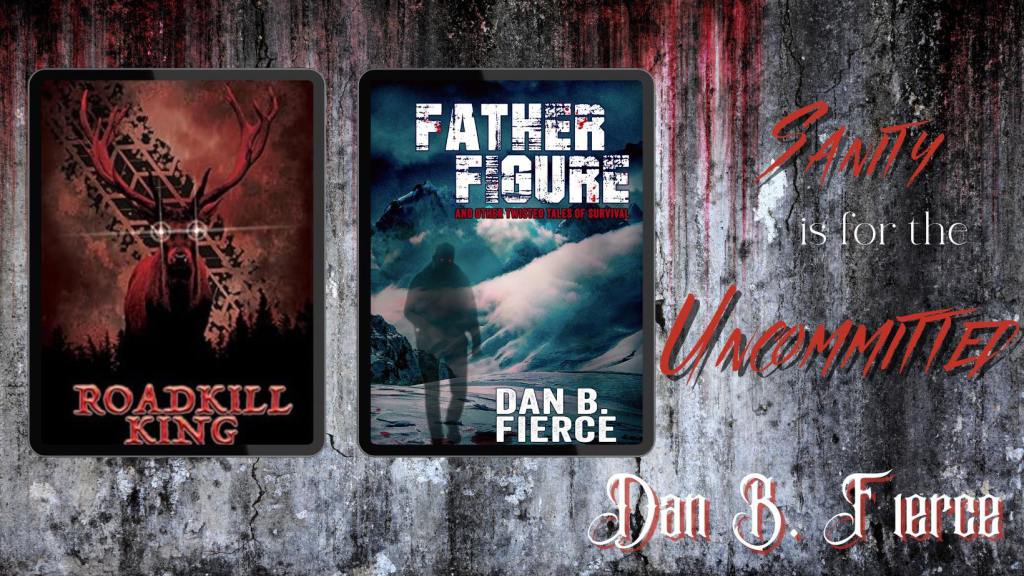
Support an Author – Interview with Dan B. Fierce

Hello! Today with us we have Nicole Burns (reader) and Dan B. Fierce (author)! *Applause*

Nicole Burns: Can you tell us about yourself and what inspired you to become a writer?

Dan B. Fierce: My real name is Dan Bugbee, but I write under the pen name of Dan B. Fierce. I write mostly horror short stories, with a couple of longer works in progress. I have a husband of over twenty-one years (married for almost five), I live with family in the Kansas City, Missouri area, and I also have a full-time job working in printing. I have always enjoyed writing, especially short stories. Edgar Allan Poe, Ray Bradbury, Stephen King, and many others inspired me to fall in love with the brevity of the short story. I never pursued doing it “professionally” until I was forty-nine years old.


Nicole Burns: What drew you to the genre that you write in?

Dan B. Fierce: As I mentioned, it is writers like Poe and King who are the biggest influences in my love of horror and short stories. Growing up in the eighties, I enjoyed a ton of great slasher flicks and other types of horror movies and books. While I do have a longer work or two in progress, I really enjoy writing short stories. It’s easier to keep track of the details.


Nicole Burns: Do you have any rituals or routines that you follow when writing?

Dan B. Fierce: Other than getting a cup of coffee and checking my dismal sales numbers neurotically before I get started, I don’t have a specific routine that I follow. Sometimes, I enjoy listening to music while I write. Other times, it’s too distracting, and I prefer silence. I do get up very early in the morning, though. I get up by three or four in the morning, so that I can get my writing done before I have to get ready for work. By the time I get off of my job, I’m usually too tired to want to write.


Nicole Burns: What do you hope readers will take away from your books?

Dan B. Fierce: I hope readers enjoy my works first and foremost. Some of my tales have lessons to them, but I’m not going to pretend that I’m so structured that I do it intentionally. I’m what’s referred to as a “pantser.” I write my stories by the seat of my pants. I don’t plan them out. I just sit down with an idea and discover it as it unfolds on the page.


Nicole Burns: What advice would you give to authors who are considering self-publishing?

Dan B. Fierce: Self-publishing has many benefits and downfalls. The pros include far more creative control, ability to keep an eye on your sales numbers, and the author keeps a larger portion of the profits. The cons include the expenses of having to pay for things like an editor (or two), buying the cover art and any other types of art, formatting, and paying for ISBN numbers (if you’re not selling exclusively on Amazon). The author is also exclusively responsible for marketing and promotion of their works. That’s why so many indie authors are constantly posting on their timelines or any other opportunities to get eyes on their products.


Nicole Burns: How do you market and promote your books?

Dan B. Fierce: I mostly use social media to market my books, hoping that a new pair of eyes fall on my stuff and that they might be interested. Word-of-mouth is always the best advertisement from my readers. I also attend a lot of pop-up vendor events locally to try to get people interested in reading my stuff.


Nicole Burns: Do you have a favorite character or book that you’ve written? If so, why?

Dan B. Fierce: While I love all of my creations, including Roadkill King, my mini-collection of short stories, Father Figure is my favorite. Two of the stories that I wrote were very emotional for me. “The Letter” was based off of an actual letter that I wrote to my dad and read to him on his grave a few years back. “Bedside Regret” was inspired by the regret that I’ve been carrying for thirty-five years when I lied to my father on his death bed when he asked me if I were gay. I told him no because I thought that was want he’d have wanted to hear, instead of telling the truth. It haunted me ever since. It’s my favorite because all of the stories were inspired by something my father either said to me, or something that I know fathers would say or do, but I turned them on their ears in the process. I also love it because I dedicated it to my father and released it on his birthday in September of last year.


Nicole Burns: How do you stay motivated and overcome challenges while writing?

Dan B. Fierce: Staying motivated is a difficult question to answer. I’m not going to lie; sometimes it’s challenging to want to write. I suppose the simple answer is that I try not to force it, because that will show up in the product. If I’m not feeling particularly creative, I keep my writing skill fresh with writing prompts or journaling every day.


Nicole Burns: What do you enjoy most about being a writer?

Dan B. Fierce: I love creating world that my readers can immerse themselves into. Nothing gives me a bigger thrill than when someone reads my stuff and tells me how much they enjoyed it.


Nicole Burns: How do you decide on the titles for your books?

Dan B. Fierce: Most of the titles dawn on me either before or during the writing process. Many authors seem to struggle with giving their works titles.


Nicole Burns: How do you unwind and recharge when you’re not writing?

Dan B. Fierce: I like to watch television. (Probably more than I should.) I also enjoy traveling around and sightseeing, going on walks in nature, and spending time with my husband.


Nicole Burns: How do you handle writer burnout or creative blocks?

Dan B. Fierce: I wish I knew how to “properly” handle writer’s block and burnout. Since writing is still basically a hobby and not my sole means of making money, I don’t put that much pressure on getting things accomplished. Perhaps I should, but until writing pays the bills and I’m actually making money on it, it’s a labor of love for the craft that keeps me going. Some days are better than others, and being blocked does hurt, but for me, it’s not a “write or die” kind of feeling.


Nicole Burns: Can you discuss the role of symbolism and imagery in your writing?

Dan B. Fierce: If I’m honest, I don’t intentionally put much symbolism into my works intentionally. I simply write what comes to my mind. As for imagery, I love painting a picture with words. It’s easy to forget that we humans have other senses beyond just sight, even for me. When an author can submerge the reader in all of their senses, it becomes more than just words on a page, it becomes an experience.


Nicole Burns: What do you think is the biggest misconception about being a writer?

Dan B. Fierce: I think that the biggest misconception as a writer is that the money will just roll in when you get published. Even with traditionally published authors, which isn’t the case. It can take years for an author to see a profit on their books, especially if they are self-published, and by then the steam has run out of their books’ sales.


Nicole Burns: Do you have any pets? If so what are they and what are their names?

Dan B. Fierce: I am currently pet-less, but I did have two weenie dogs whose names were Frankie and Jonnie. They both gave me sixteen wonderful, happy, and comical years of memories before old age became too much for them and we had to do what was right for them. I want to have dogs again at some point (both my husband and I are allergic to cats), but I want to get rescue dogs next time.


Thank you for both for participating in Support An Author event!!!

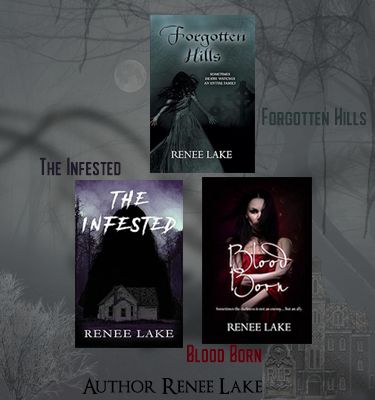
Support an Author – Interview with Renee Lake

Hello! Today with us we have Jet Boston (reader) and Renee Lake (author)! *Applause*

Jet Boston: What inspired you to become a writer?

Renee Lake: I don’t know. I have always written, even since I was small. Plays for my sisters, one pages stories about sentient donuts and fan fiction before I was even aware of what that was.


Jet Boston: Do you have any rituals or routines that you follow when writing?

Renee Lake: I have music play lists and I find a great notebook to start plotting with.


Jet Boston: Do you outline your stories before writing, or do you prefer to let the story unfold as you write?

Renee Lake: I start as a panster and just write, about five chapters in I begin to plot.


Jet Boston: Do you have a favorite character that you’ve written? If so, why?

Renee Lake: Persephone from The Infested. Because she’s strong, creepy and kind.


Jet Boston: What do you enjoy most about being a writer?

Renee Lake: I love creating characters, worlds and monsters. I love getting the things out of my head and onto the page.


Jet Boston: What do you hope readers will take away from your books?

Renee Lake: How much time and effort the author put into it, and something personal, something that they can hold to their chest and take away from my words. 


Jet Boston: What advice would you give to authors who are considering self-publishing?

Renee Lake: If you can afford it, hire an editor. I wish I’d been able to with my first books. Make sure you have beta readers and keep writing. Don’t stop and dont give up. Also- don’t read reviews.


Thank you for both for participating in Support An Author event!!!

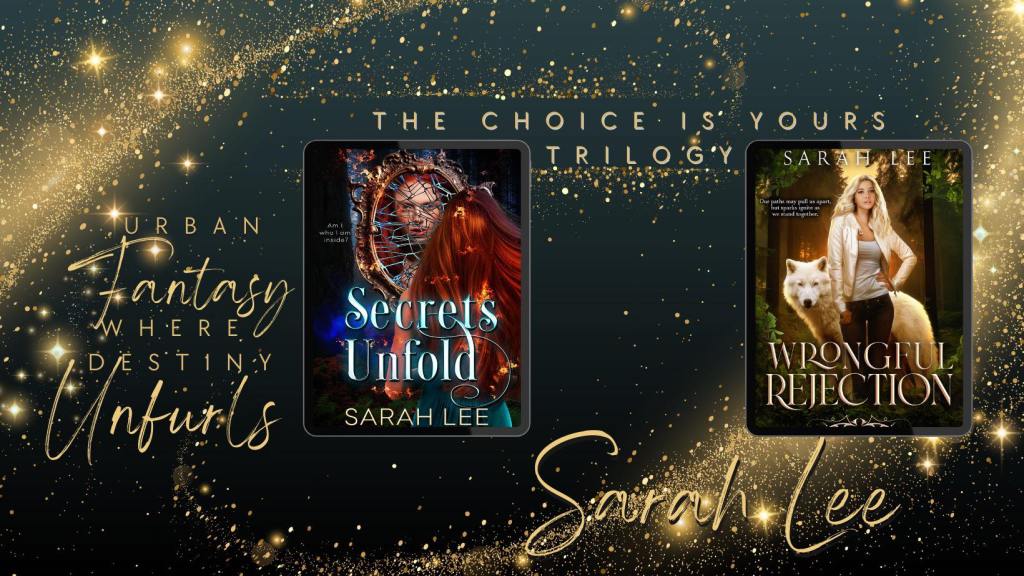
Support an Author – Interview with Sarah Lee

Hello! Today with us we have Susan Wesolowski (reader) and Sarah Lee (author)! *Applause*

Susan Wesolowski: How old were you when you realized you wanted to become an author? 

Sarah Lee: I never knew I wanted to be an author. I never liked reading books. Wasn’t good at writing. I wasn’t a fan of any of it. Then I signed up to adopt a soldier program and started writing letters to them. I began enjoying writing letters. I never liked reading books until I found what genre I enjoyed. Wasn’t until Twilight by Stephany and Thirst by Christopher Pike that got me into reading. Back then I started to write for fun cuz ideas came to me. But I never allowed anyone to read anything I wrote. I was too shy. Wasn’t until I hit my mid 20s when I decided I wanted to publish a book to see if I could do it. Didn’t really become a thing until my late 20s when I buckled down to think more on being an author. 


Susan Wesolowski: Who or what gave you the inspiration to become an author?

Sarah Lee: If I’m being completely honest about the question, I don’t know where the inspiration to be an author came from. No one gave me the idea, no one said you should be an author if anything the opposite. No one wanted to help me reach my goal to be an author. So maybe it was all about me proving myself I can do it. Do something for myself for once.


Susan Wesolowski: The series I am reading is Fantasy/Paranormal.  Is that the only genre you write? Your favorite or your first?

Sarah Lee: No, fantasy/ paranormal is not the only genre I write. It’s my favorite and my comfort place to write but it’s not my only one. It’s the first I wrote though. 


Susan Wesolowski: In the book Secrets Unfold you give the reader a glimpse into what motivated you to write it. What about the second book?

Sarah Lee: The second book I did not have a motivation. I felt super alone on that book. When it came to building the book I had my amazing team help me build it but when it came to writing it, I had no one. 


Susan Wesolowski: Are any of your characters based on your own experiences or people you know?

Sarah Lee: In a way, yes. Having my own experience in the book makes it more personal but I flip it to match the storyline or the character in the book. Almost every author has a muse so yes my muse is in the book as well.


Susan Wesolowski: Do you use an outline for your stories or just sit down and write whatever is in your head and your heart ❤️?

Sarah Lee: Soooo first book I just wrote whatever the characters told me to write. Second book I plotted it out. Sadly I went off the outline and had to figure out how to try to plot it again. For me it’s easier to write where my heart takes me. 


Susan Wesolowski: How do you come up with your visual concepts that you convey to your readers?

Sarah Lee: If I can’t see it I close my eyes and imagine what I would see. Then I’ll write what I see. What I feel. What I smell. What I’m doing.


Susan Wesolowski: What genres do you enjoy reading the most? Favorite authors?

Sarah Lee: Fantasy, paranormal, a little romance. Noelle Adams, Amy Bartol, PC Cast, Kristian Cook, Taylor Dawn, Jenny Fox, Leigh James, Irtania Adrien, Eva Zahan, Heather Renee, Christopher Pike, Alyson Noel, Jessica Hall are just a few.


Susan Wesolowski: How do you choose the titles for your books? Do you choose the covers first?

Sarah Lee: Titles are a pain. I’ll write words that represent the book. Look up words and meaning and put words together. I’ll play around with them and flip and come up with a list of titles I somewhat like. I then send it to a few people and get a vote on it. Get it down to the top three and let it sit there until I have the that’s it feel and choose it. The third book however I was just having a conversation with someone and she said words and I’m like that’s my book title for book three! So I was shocked I didn’t have to do all those steps I just knew.

No it doesn’t matter if the cover is done or if I have the title or not. Sometimes I have the title and have no clue what I want on the cover and other times I have the cover done and the designer is waiting on me to come up with a title. I will say having a cover done makes it real. So I like having the cover done before the book is even written or finished. 


Susan Wesolowski: What do you do for fun or to unwind when you hit a brick wall while writing?

Sarah Lee: Write a different story when I’m blocked on the one I’m writing. Sometimes I have other characters screaming at me to write and if I don’t write it down I can’t get back to the story I need to work on.


Susan Wesolowski:  What is the biggest misconception for you about becoming an author?

Sarah Lee: Reading my book and knowing me in real life people are conflicted on who I truly am. They think I’m depressed cuz in their eyes all I do is stay locked away when really I’m in the zone and I’m writing. They read my book thinks it’s dark and then spread rumors about me.


Susan Wesolowski: What do you enjoy most about being an author? Least?

Sarah Lee: I love escaping. But what I’m truly grateful is there are other authors out there that know exactly how to be there for another author. We found our home with one another. That’s a beauty in itself.  Least favorite about being an author? Hmm, the format puts me in tears. 


Susan Wesolowski: In the Secrets Unfold series, who are your favorite characters? Heroes and Villains?

Sarah Lee: Colby is my favorite hero. Felixia is my favorite villain. 


Susan Wesolowski: What do you hope readers will take away from your books?

Sarah Lee: One thing I want the readers to take away is don’t allow any type of fear to  stop you. There are different paths to take and we don’t know what’s inside any of them. Take a leap of faith and push yourself forward even though fear is trying to stop you. 


Susan Wesolowski: While writing a series do you already have the next series in mind and the characters in your head?

Sarah Lee: Yes, I do already have a series in mind. Bought the covers for the entire series have the characters all picked out and the main idea for each storyline. It’s going to be the Standing Against Fate Series. I also have standalone books coming out this year too! That I’m looking forward to releasing.


Thank you for both for participating in Support An Author event!!!

Writing and Disability – Guest Author Monday – Bethany Loughlin-Frost #Papilledema

Hello! Today with us we have the amazing Bethany Loughlin-Frost:! *Applause*

Angelina: If you’re comfortable, stable your disability and explain to the audience what it is:

Bethany Loughlin-Frost: Papilledema: A neurological disorder where I have access fluid that pushes on my optic nerves causing intense 24/7 migraines. Eventually it will cause me to go blind.


Angelina: Please state your author name, the genres you write in and how long you’ve been published. 

Bethany: Bethany Loughlin-Frost: Paranormal Romance, Contemporary Romance, Fantasy Romance. I have been officially published since 2014.


Angelina: Can you share how your disability influences or informs your writing process or the themes you explore in your work?

Bethany Loughlin-Frost: Depending on the day, it can completely take me out and make me unable to even sit up and look at a computer. It will also make the simple task of just thinking hurt too much. Because of this I have severe anxiety and depression which in turn makes imposter syndrome set in. I can go months without being able to write if a flare up happens.


Angelina: How has your personal journey with your disability impacted the stories you tell or the characters you create in your writing?

Bethany Loughlin-Frost: I tend to make my stories based on more realistic events that happen in my life for the simple fact that I don’t have to think too much about it and thus don’t have to put the strain on my brain in the process. I also will write character of how I wish to be (normal), completing things I wish I had done in the past before this disability made writing more difficult.


Angelina: What challenges, if any, have you faced as an author with a disability, and how have you navigated or overcome them in your writing career?

Bethany Loughlin-Frost: It sucks for me because my disability is not one that is easily “seen”. Since it’s completely internal and flare up make people think I’m just being over dramatic with a “headache”. I tend to not tell people about it because they just don’t understand.


Angelina: In what ways do you think literature and storytelling can help raise awareness or promote understanding of disabilities in society?

Bethany Loughlin-Frost: If we as authors can make disabilities more “normal” then I think society as a whole will not shun it as much. They won’t see disability as a “problem to fix” but more of a characteristic to embrace.


Angelina: Have your experiences with your disability shaped your writing style or the way you communicate ideas and emotions in your work?

Bethany Loughlin-Frost: Yes. Since I go through spirts where I can’t think, that will affect my memory a lot. So, I have to write down every idea the moment it comes to mind, or I’ll forget it and then be really upset with myself. It also helps me stay more on task because I can stop during a flare up and not lose where I was going.


Angelina: Can you discuss any specific strategies or adaptations you’ve implemented to accommodate your disability while pursuing your passion for writing?

Bethany Loughlin-Frost: I take some meds, and prefer to be in the quiet of my office. I will play music that helps calm my brain a bit so that it distracts the mind enough for me to ignore my symptoms.


Angelina: What advice would you offer to aspiring authors with disabilities who might face similar challenges in pursuing a career in writing?

Bethany Loughlin-Frost: Everyone has something they struggle with, disability or not. Don’t let it stop you or slow you down. Embrace it and be the bada$$ you were meant to be.


Angelina: Have you encountered any misconceptions or stereotypes related to your disability within the literary world, and how do you address or challenge them through your writing?

Bethany Loughlin-Frost: It’s a very rare disability that even most doctors don’t really know. So, I usually just tell people I have migraines and leave it at that. The most I get is “well, just take some tylonal and you’ll be fine”. I tend to just smile, nod and walk away.


Angelina: Can you share an instance or a character from your writing where your disability served as a source of empowerment or inspiration?

Bethany Loughlin-Frost: My current WIP has a character that has a lot of self doubt and just expects people to not understand her. She’s really “me” in a sense and I found a lot of strength through writing her and making her more empowered.


Angelina: How do you believe literature can contribute to a more inclusive society that embraces diversity, including individuals with disabilities?

Bethany Loughlin-Frost: See above


Angelina: Have you found a community or network of support among other authors with disabilities, and how has this influenced your writing journey?

Bethany Loughlin-Frost: Again, mine’s one of those “not seen” disabilities that I tend to keep to myself. I don’t want people to think I’m “competing” with them on something like this. Writing isn’t a competition, it’s a coalition of like-minded people that should always build each other up.


Angelina: Did you have your disability when you began writing, or did you acquire it afterward? How has this experience affected your writing journey and your approach to storytelling?

Bethany Loughlin-Frost: No, I got diagnosed with it in 2017. I was really confused and surprised especially because most people that get this are cured within 6 months. I’m one of the 1% that has chronic and will never be rid of it. It’s made my writing journey much slower. I wish I could type out manuscript after manuscript, but I can’t. I get excited when i’m able to write for a week straight without a flare up at this point.


Angelina: Can you describe your typical writing routine or session? Have there been any changes in your approach over the years? In what ways do you think your writing process might differ from that of an author without a disability?

Bethany Loughlin-Frost: If everything is planned, I get up (let the doggos out), then go to my office from about 9am-3pm. I spend that time trying to write as well as catch up on social media. It’s about as long as I can handle looking at a computer or thinking before I’m done for the day. I try to do this 6 days a week with Sunday being my no technology day. Since I need to write things in order to not forget, I prefer pencil to paper. So a coule days of the week when I’m in my office, my haed is in a notebook so I don’t have to worry about looking at a screen. i have people tell me all the time that making plans online is easier, but for me it’s just an extra trigger for my migraines. Pencil/paper doesn’t have that affect, so all my notes are hand written.


Angelina: Could you share with the readers what your favorite work is among those you’ve written? What makes it special, and why would you recommend readers to pick it up?

Bethany Loughlin-Frost: My current WIP (a trilogy) is my favorite because I was able to write it during a strong flare up and powered through it. I really love the story idea and can’t wait to publish it.


Angelina: Where can readers connect with you online? Which social media platform do you frequent the most for engaging with your audience?

Bethany Loughlin-Frost: I have a website. I’m also on facebook and instagram. i’m still learning tiktok, but will be on there eventually as well.


Angelina: What key messages or insights do you hope readers and fellow writers will gain after reading this interview?

Bethany Loughlin-Frost: We are stronger together, especially when we support each other. You don’t know what struggles someone is going though, and you have zero right to demean them just because their struggle is different.


Angelina: Thank you for being here. The next guest author will be here next Monday.

Writing and Disability – Guest Author Monday – FJ Roberts #chronicobstructivepulmonarydisease

Hello! Today with us we have the amazing FJ Roberts! *Applause*

Angelina: If you’re comfortable, stable your disability and explain to the audience what it is:

FJ Roberts: I have Stage 4 COPD or chronic obstructive pulmonary disease. It’s a restriction of airflow causing breathing issues. This common lung disease is often called emphysema or chronic bronchitis. In people with COPD, the lungs can get damaged or clogged with phlegm. There is no cure (well, a lung transplant) , but with proper exercise, medication, and strength of will, the disease progression can be slowed by relieving symptoms and keeping yourself healthy.


Angelina: Please state your author name, the genres you write in and how long you’ve been published. 

FJ Roberts : FJ Roberts at your service and it is a pleasure to meet everyone. My writing journey began in 2018 and hasn’t stopped as of yet…Well, I do have to save somethings for later in the interview. And as you can tell, I write mystery/suspense romance.


Angelina: Can you share how your disability influences or informs your writing process or the themes you explore in your work?

FJ Roberts: I normally allow my characters to write their stories. LOL. Honestly, I start with a single idea and go from there. The names come as the character is formed. The challenges materialize as the problems progress. LOL.. and usually someone dies along the way.


Angelina: How has your personal journey with your disability impacted the stories you tell or the characters you create in your writing?

FJ Roberts: I noticed when I was diagnosed in 2021, my writing took a dark turn and not in a good way. If I had smoked, drank, and didn’t take of myself I could’ve understood. But I had surgery and a year and half later was told I would need to be on oxygen to live. I can’t tell you how many times I wrote, deleted, rewrote, and deleted again, because the words were…I couldn’t believe what I had become. It was scary.


Angelina: What challenges, if any, have you faced as an author with a disability, and how have you navigated or overcome them in your writing career?

FJ Roberts: The challenge is to come to terms with your diagnosis. Hmm…I acted as though I was dying and what I did was put too much pressure on myself to finalize my life. It wasn’t until I awoke one morning and suddenly realized I wasn’t dead. I still had alot of life in me. Yes, I have good days. And yes, I have bad days. It is on those days, I turn to other things – puzzles, word games, coloring, RPGs. Anything that will distract me.


Angelina: In what ways do you think literature and storytelling can help raise awareness or promote understanding of disabilities in society?

FJ Roberts: Oh, there’s books out there, but most of them have big fancy words which you need a dictionary to decipher. LOL. Would be nice to find one that is straightforward and to the point. This is what you got. This is how you handle it. And remember to smile and live life.


Angelina: Have your experiences with your disability shaped your writing style or the way you communicate ideas and emotions in your work?

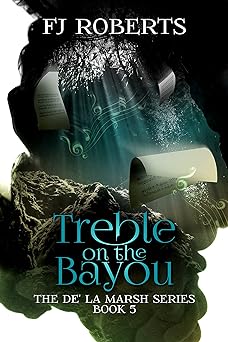
FJ Roberts: Before my diagnosis, I was in beginning the last of the de’ la Marsh series. I can honestly say, it’s still waiting to be finished. I open it up, glance over it, and close it. Not sure where to go with it.


Angelina: Can you discuss any specific strategies or adaptations you’ve implemented to accommodate your disability while pursuing your passion for writing?

FJ Roberts: Still trying to find my niche.


Angelina: What advice would you offer to aspiring authors with disabilities who might face similar challenges in pursuing a career in writing?

FJ Roberts: Hmmm…open two blank pages. Label them good and bad. What every emotion you’re having for the day, write on that one and don’t hold back. Let every emotion go. You may surprise yourself.


Angelina: Have you encountered any misconceptions or stereotypes related to your disability within the literary world, and how do you address or challenge them through your writing?

FJ Roberts: LOL…seriously…ohhh…I started writing at fifty-three. Have books published. If you would told this back…well you get the general jest. Anyone, any age, disablility or not, can write. You just have to pick up a pen or let your fingers walk across a keyboard.


Angelina: Can you share an instance or a character from your writing where your disability served as a source of empowerment or inspiration?

FJ Roberts: I have a character that I have been mulling over. We’ll see.


Angelina: How do you believe literature can contribute to a more inclusive society that embraces diversity, including individuals with disabilities?

FJ Roberts: Characters are individual based. Nothing wrong with having a diverse character as the lead or as a strong secondary. And it happens in books. Everyone one of my characters in de’ la Marsh have some sort of disability. Interesting.


Angelina: Have you found a community or network of support among other authors with disabilities, and how has this influenced your writing journey?

FJ Roberts: Unfortunately, there isn’t a support group for COPD. Although, I do have the support of an amazing friend. She is my rock.


Angelina: Did you have your disability when you began writing, or did you acquire it afterward? How has this experience affected your writing journey and your approach to storytelling?

FJ Roberts: December 2019 had shoulder surgery. Before you go in, they give you a bunch of papers to look over. Sign here. Initial there. Op, you forgot one. Two days after surgery, I was admitted to the hospital and found I had aspirated. Umm…let’s just say that I went in healthy and came out different. Seven months later I was seeing a pulmonologist, testing for a year, and then had the bomb dropped in my lap. I didn’t want to look at a blank page.


Angelina: Can you describe your typical writing routine or session? Have there been any changes in your approach over the years? In what ways do you think your writing process might differ from that of an author without a disability?

FJ Roberts: LOL. Ohh…lot’s of tea or lemaonade. open a page and start hitting keys. LOL. Okay, so it may not be the normal. Some plot. Some research. Some do whatever it is. I…just type. It can be for a couple of hours or a couple of days. Depends on the characters.


Angelina: Could you share with the readers what your favorite work is among those you’ve written? What makes it special, and why would you recommend readers to pick it up?

FJ Roberts: Hasn’t been published yet.


Angelina: Where can readers connect with you online? Which social media platform do you frequent the most for engaging with your audience?

FJ Roberts: Korky Thibodeaux or FJ Roberts on Facebook. They can also drop me a line with questions or comments at fjroberts@gmail.com


Angelina: What key messages or insights do you hope readers and fellow writers will gain after reading this interview?

FJ Roberts: It’s taken me some time to come to termswith my life, where it’s headed, and the outcome. There is no expiration date on the bottom of my foot. I can’t stop time or reverse it, but I can fight like hell. Keep your will strong. Believe your faith will guide you. And love unconditionally, remembering to respect the past, the present, and the future. Don’t be scared to let your emotions, because life is what you make it. Live every moment without regret.


Angelina: Thank you for being here. The next guest author will be here next Monday.

Writing and Disability – Guest Author Monday – Carmen Richter#lymphedema

Hello! Today with us we have the amazing Carmen Richter! *Applause*

Angelina: If you’re comfortable, stable your disability and explain to the audience what it is:

Carmen: I have a few different medical conditions, but the most prevalent is primary lymphedema. Essentially, my lymphatic system has stopped working properly and no longer flushes waste fluid through my body like it’s supposed to. This leads to swelling in the limbs, similar to regular edema. The difference is, with lymphedema, it’s not water that gets retained; it’s protein fluid, which hardens and keeps building up in your body. When left undiagnosed and untreated, this can lead to extremely large, deformed limbs (think elephantiasis), and it also can lead to dangerous infections from the stagnant protein fluid and/or open wounds that won’t heal because you don’t have proper circulation in the limb. In my case, my right leg is over twice the size of my left leg. I’m homebound, can’t walk properly, drive, or wear normal shoes or pants, and I’ve been hospitalized with infections and open wounds in my leg several times, once for a full month. I

n addition, I’m an insulin-dependent diabetic, which impairs my ability to fight off infections and the speed of my healing when I get open wounds.

I also have anxiety, depression, autism, ADHD, and complex PTSD (which is PTSD from prolonged trauma). Those issues go way further back than the start of my physical disability, but dealing with the extreme life change from becoming fully disabled has definitely made my mental health more of a challenge.


Angelina: Please state your author name, the genres you write in and how long you’ve been published. 

Carmen : I’m Carmen Richter, I write steamy contemporary romance in several different subgenres, and I’ve been published since August 2017.


Angelina: Can you share how your disability influences or informs your writing process or the themes you explore in your work?

Carmen: My mental health issues definitely influence my work more than my physical health issues do. I think the biggest way my disability influences me is that due to the issues I had with not being heard by medical professionals before I was officially diagnosed with lymphedema, I’ve found myself wanting to tell stories about people who struggle finding their voice and have to learn to advocate for themselves in some way.


Angelina: How has your personal journey with your disability impacted the stories you tell or the characters you create in your writing?

Carmen: More than anything, I think it makes me curious to learn more about the challenges other people face and create characters from ALL walks of life. When one of my characters has life experiences I don’t know a lot about, I do tons of research, talk to people who have knowledge in the area, and do my best to portray those experiences accurately, because that’s what I would want someone to do if they wrote a character with my life experiences.


Angelina: What challenges, if any, have you faced as an author with a disability, and how have you navigated or overcome them in your writing career?

Carmen: I know this sounds silly, but a huge challenge for me is connecting with readers. Being homebound, I can’t go to book conventions or signings, so the only way I can connect with readers is online. I’ve tried to post to TikTok at least semi-regularly so I can let people see my face (which I’ll freely admit I’ve been horrible about lately), and I sell signed paperbacks in lieu of going to signings. And I actually have a little something else up my sleeve that I’ll be announcing soon, but it’s not quite ready yet. 😉


Angelina: In what ways do you think literature and storytelling can help raise awareness or promote understanding of disabilities in society?

Carmen: I think that when people read about characters from different walks of life, who maybe struggle in a way the reader doesn’t, it can help breed compassion. We can never truly know what another person is going through, but if we can make an effort to expand our horizons, that’s a step in the right direction.


Angelina: Have your experiences with your disability shaped your writing style or the way you communicate ideas and emotions in your work?

Carmen: Not so much with my physical disability, but I do tend to write characters who deal with mental health issues a lot, particularly anxiety. When my characters are going through something traumatic, I try my best to really convey the physical effects of the emotions on their bodies as well as the thoughts behind them.


Angelina: Can you discuss any specific strategies or adaptations you’ve implemented to accommodate your disability while pursuing your passion for writing?

Carmen: Honestly, the biggest adjustment I’ve had to make is being patient with myself. There are times when my body simply cannot handle writing and I need to rest, and I’ve had to learn to pay attention and allow myself that time when I need it. I’ve learned the hard way not to put up a ton of pre-orders at once, because I honestly can’t guarantee that I’ll be able to meet those deadlines.


Angelina: What advice would you offer to aspiring authors with disabilities who might face similar challenges in pursuing a career in writing?

Carmen: Be patient with yourself! You don’t have to be a superhero. Find a system that works for you, no matter if it makes sense to anyone else, and play to your strengths rather than worrying about doing it all.


Angelina: Have you encountered any misconceptions or stereotypes related to your disability within the literary world, and how do you address or challenge them through your writing?

Carmen: I see more misconceptions about the mental health issues I have and my neurodivergence. But I’ve found the best way to challenge misconceptions about ANY disability is by telling stories with characters who live with those challenges without making it their entire personality. I let my readers fall in love with those characters and, through that, show them that people who have disabilities, no matter what kind, are human too.


Angelina: Can you share an instance or a character from your writing where your disability served as a source of empowerment or inspiration?

Carmen: I certainly can! Actually, I have two.

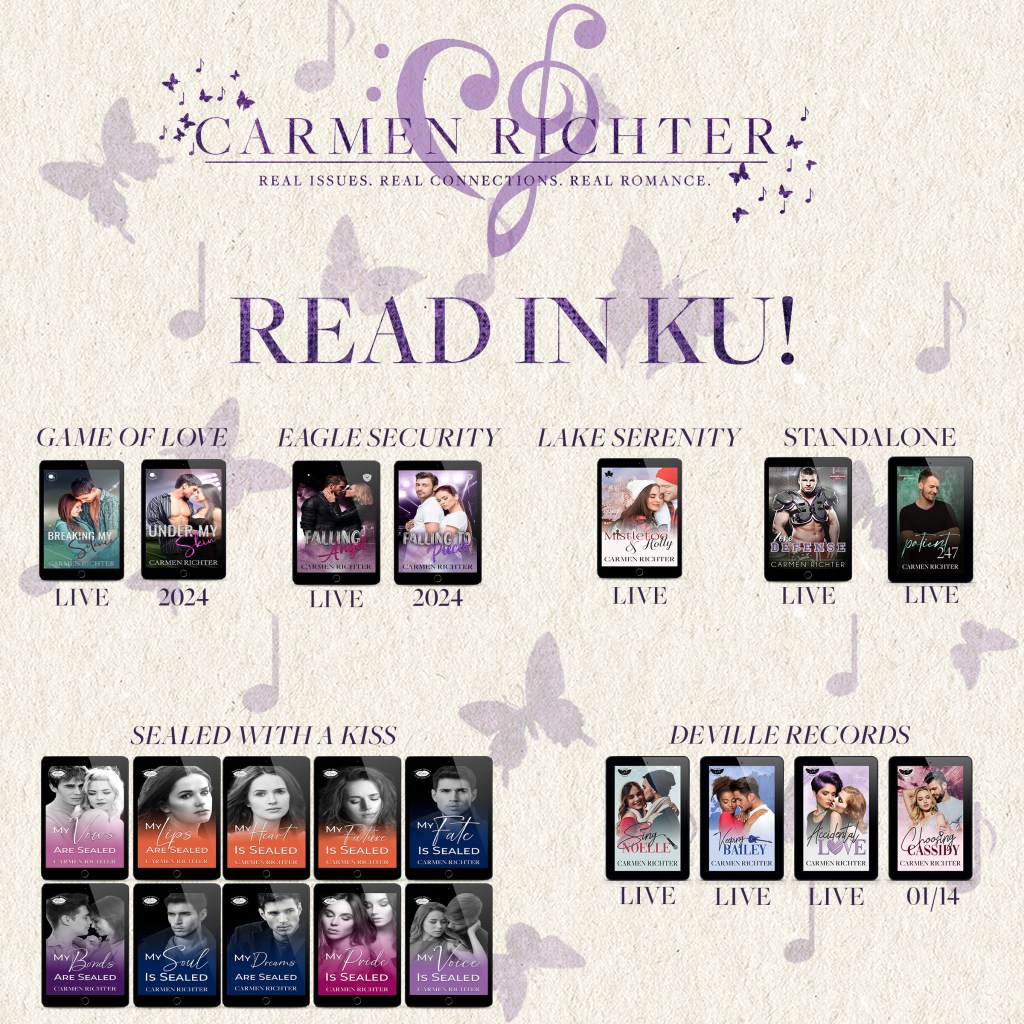
The character Hope in my book Patient 247 is 100% me. She has my health conditions and my personality, and she’s even an indie romance author like me. I wrote that book about my experiences with finally getting the help and treatment I needed, and other than the love story, it’s all real things that actually happened to me. It was hands-down the hardest book I’ve ever written because I had to relive some extremely traumatic memories to make the story the best it could possibly be.

The second instance is a bit more abstract. The character Sadie in my book My Voice Is Sealed deals with being abused medically (I don’t want to give away any more than that because I don’t want to spoil the story for new readers). And while her experiences and her illness are VASTLY different than mine, what I drew from my own life when writing the story was the feeling of helplessness and not being heard by medical professionals when I was still seeking my diagnosis. Trying so hard to find your voice and advocate for yourself when everyone you talk to seems to think they know better than you do about what’s happening in your body.


Angelina: How do you believe literature can contribute to a more inclusive society that embraces diversity, including individuals with disabilities?

Carmen: I think that if people took the time to read stories written by people with different backgrounds and experiences, we’d all understand each other better and realize that life is a HUMAN experience. Just because a person experiences life differently, it doesn’t mean their experiences are any more or less valid than anyone else’s.


Angelina: Have you found a community or network of support among other authors with disabilities, and how has this influenced your writing journey?

Carmen: I’ve met several authors with all different kinds of mental and physical health issues. Most notable, though, are my two alpha readers, who are also two of my best friends. I honestly don’t know where my career would be if it wasn’t for them because they are my biggest supporters and cheerleaders, but they’re also not afraid to tell me if my rough drafts suck and give suggestions for how to make them better.


Angelina: Did you have your disability when you began writing, or did you acquire it afterward? How has this experience affected your writing journey and your approach to storytelling?

Carmen: My disabilities were beginning to show when I first started writing, but it’s gotten progressively worse over time. I’d like to say that becoming completely disabled and having to stop working gave me more time to write…but the truth is, I’ve had to slow down because my health has taken a nosedive. But at the same time, I’ve become more of a perfectionist because of that. I refuse to release a story that I’m not truly proud of, and I will keep working on my books until I’m supremely confident that they’re the best they can possibly be.


Angelina: Can you describe your typical writing routine or session? Have there been any changes in your approach over the years? In what ways do you think your writing process might differ from that of an author without a disability?

Carmen: A lot of my writing is done from my bed. Sometimes I’ll sit on the side of the bed and write, and sometimes I have to use a tray table and write lying down so I can elevate my bad leg.


Angelina: Could you share with the readers what your favorite work is among those you’ve written? What makes it special, and why would you recommend readers to pick it up?

Carmen: My favorite story I’ve written is Zoe and Elijah’s story in my Sealed With a Kiss series. It’s told in two trilogies – hers and his – and it’s sweet, steamy, heart-wrenching, and sit-on-the-edge-of-your-seat suspenseful. The story starts as a student/teacher romance in the first book of each trilogy, and then the second and third books of the trilogies jump into the future, where it turns into a second chance romantic suspense story with a stalker, trauma, and secrets that come to light. Maybe it’s because it was the first story I ever wrote, but Zoe and Elijah will ALWAYS be my favorite couple. I think what makes their story unique and different is that some of the hardest stuff this couple faces comes after they say “I do.” The story doesn’t just end with wedding bells. They have to make a choice to fight together, to not let all the trauma they go through together break them. And I just think there’s something so beautiful about that because that’s what true, real love is made of.

If you’d like to read the books, here are the titles. The story is written sort of like the 50 Shades series, with a trilogy from each of their perspectives, so while you’ll get different information in each trilogy, you only need to read one or the other to get the full story.

ZOE’S TRILOGY:

1. My Lips Are Sealed

2. My Heart Is Sealed

3. My Future Is Sealed

ELIJAH’S TRILOGY:

1. My Fate Is Sealed

2. My Soul Is Sealed

3. My Dreams Are Sealed


Angelina: Where can readers connect with you online? Which social media platform do you frequent the most for engaging with your audience?

Carmen: I’m all over the Internet! But I particularly love hanging out and causing shenanigans in my Facebook reader group, Richter’s Romance Readers. You can join the fun here: http://www.facebook.com/groups/richtersromancereaders


Angelina: What key messages or insights do you hope readers and fellow writers will gain after reading this interview?

Carmen: I hope they’ll see that there is still a way to achieve your dreams when life throws the unexpected at you, even if you have to adjust your goals and find workarounds.


Angelina: Thank you for being here. The next guest author will be here next Monday.